254 Everest Ln #3, St Johns, FL 32259


A lost tooth often affects the way you eat, talk, and smile. You can be enjoying shrimp tacos along the St. Johns River one day, and the next, you realize that there is a gap that you just can’t seem to ignore. Tooth loss is a common problem, but deciding which solution to use is often confusing because there are many options that seem similar at first.
Being aware of available options allows you to make confident, informed decisions. For patients seeking tooth replacement options in St. Johns, a dental bridge vs. implant comparison is often necessary, as both options restore functionality and aesthetics. If you have been researching dental implants in St. Johns, you may have wondered what the differences are between the two.
Understanding The Two Main Tooth Replacement Methods
Before we dive into comparing the two methods, it is essential to understand how each tooth-replacement method works and what distinguishes them. Although both methods will restore your smile, they both use different structures to hold the new tooth in place.
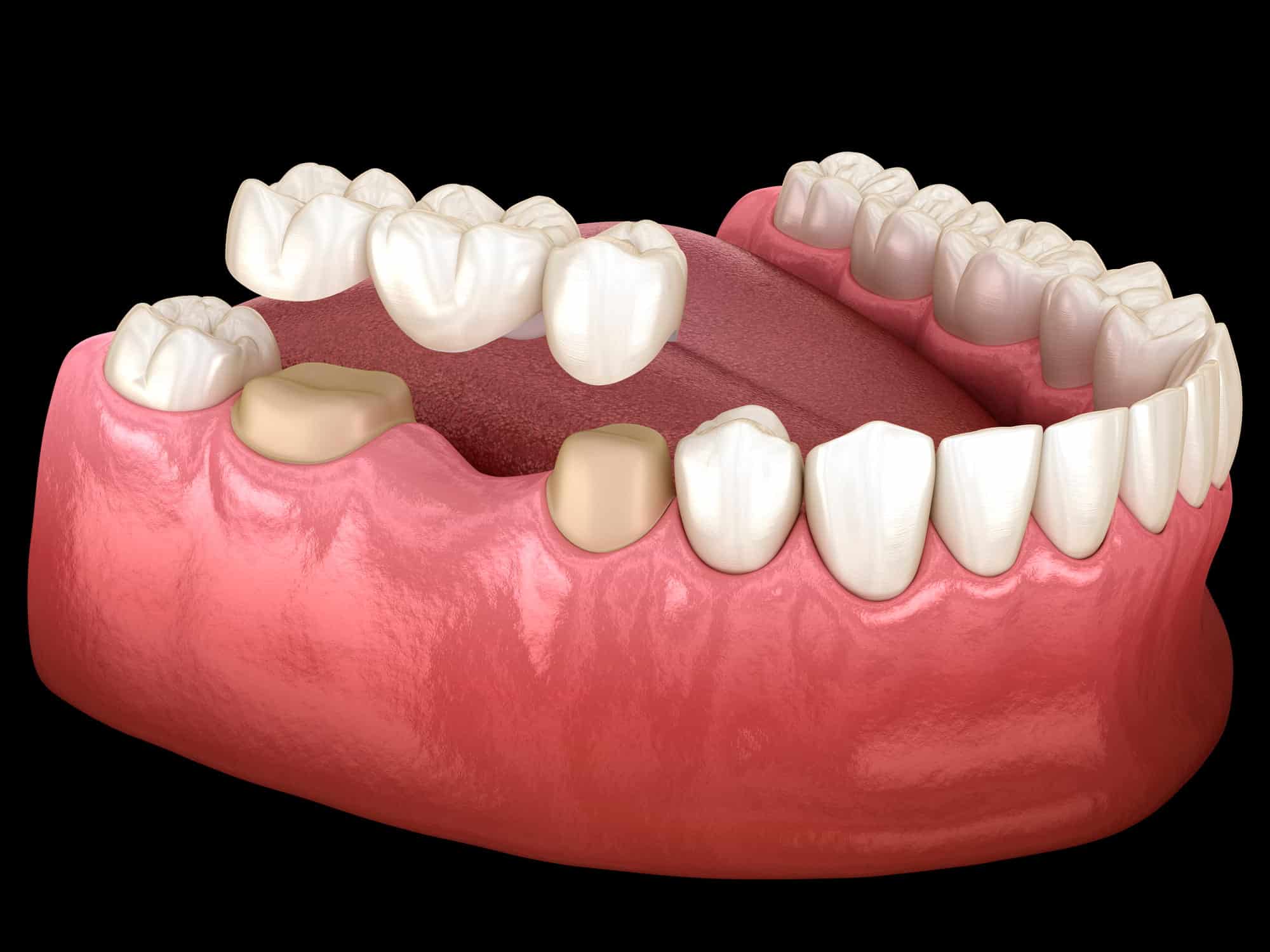
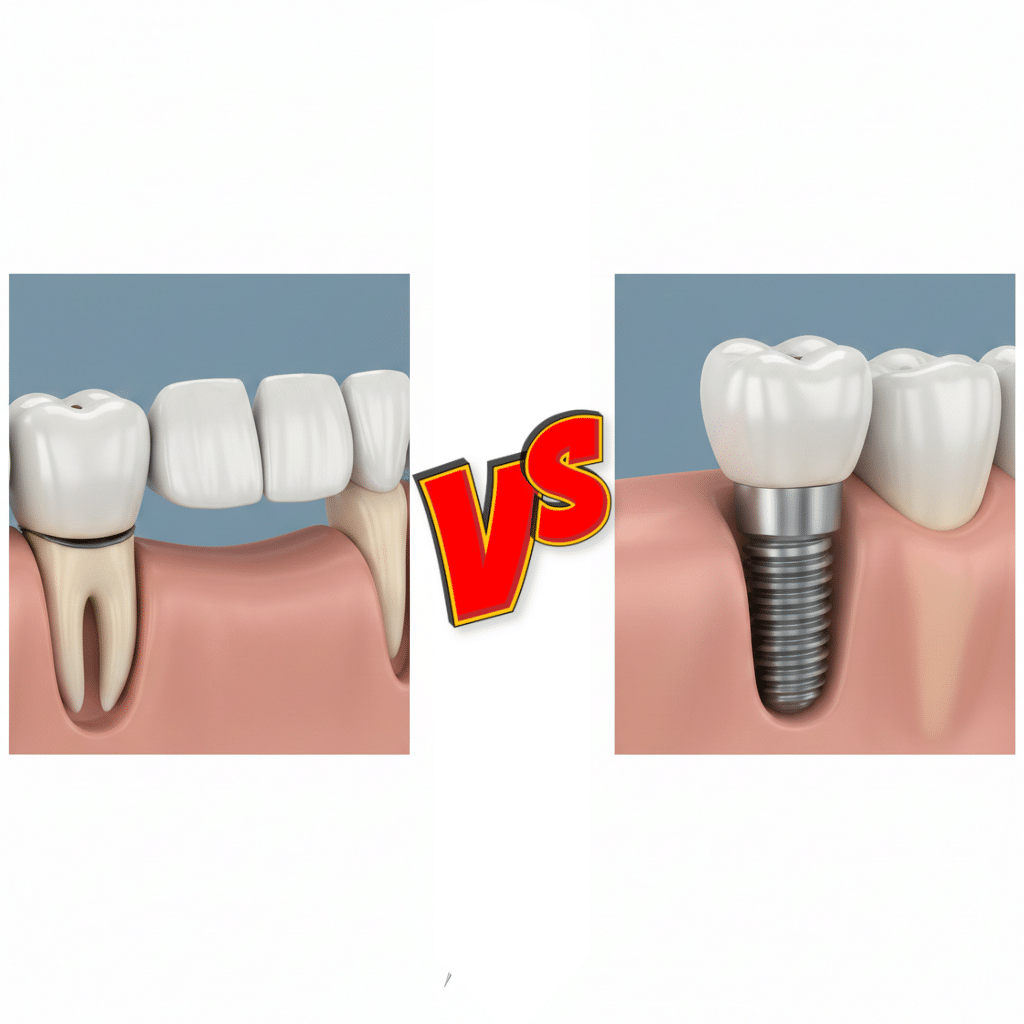
Dental bridges rely on the adjacent teeth as anchors. The adjacent teeth are shaped so crowns can be placed on them, and a new tooth is placed between the crowns. This process is effective because it doesn’t require surgery.
Dental implants, on the other hand, fill the gap left by a missing tooth by replacing it at the root level. A titanium rod is placed inside the jawbone to serve as a root substitute. Once the healing process is complete and the bone has integrated with the rod, a crown is placed on top, making it a self-sufficient unit.
Both procedures enhance functionality and cosmetic appeal. However, the internal structure of the dental implants in St. Johns results in some significant differences between the two.
Bridge vs Implant Pros and Cons
People often ask, “Implant or a bridge, which is better?” The answer depends on the patient’s oral health, bone structure, and future plans. Here is a brief comparison:
Bridges:
- Faster completion time
- Supports the bridge using existing teeth
- No surgery required
Implants:
- Supports teeth independently
- Preserves bone structure
- Does not use adjacent teeth
The best choice is often based on biology rather than preference.
Key Differences Between Dental Bridge vs Implant
It is essential to understand the differences between the two options for tooth replacement. Both options can help restore functionality and aesthetics. However, they differ in design, longevity, maintenance, and their effects on other teeth. Understanding the differences will help you make the right choice.
Structural:
- Bridge: uses adjacent teeth
- Implant: rooted in the bone
Biological:
- Bridge: doesn’t promote bone growth
- Implant: promotes bone growth
Functional:
- Both: help restore bite function
- Implant: helps restore root function
Longevity:
- Bridge: may have to be replaced
- Implant: can last for many years.
Impact on Neighboring Teeth
One of the most significant differences between a dental bridge vs implant is the impact each has on neighboring teeth.
- Bridges: The neighboring teeth must be reshaped to support the crowns.
- Implants: The implants are independent and do not affect the neighboring teeth.
When the teeth are healthy, it is often a priority to preserve the natural structure. This alone is a consideration that affects many long-term comparisons, such as bridges versus implants.
Bone Preservation vs Bone Resorption
Your jawbone requires stimulation from the roots of your teeth. Without a tooth, the bone beneath it can shrink. This is called resorption.
- Endosseous implants act like roots and stimulate bone growth. They preserve the bone density.
- A bridge rests on top of the gum, so it doesn’t stimulate the bone. Some patients may require bone grafting for dental implants if the bone has already resorbed.
This biological difference is why implant survival rates are generally better than those of bridges, assuming the bone is suitable for implantation.
Treatment Timeline and Staging
There are multiple steps in the process. The dental implant recovery period is necessary for the bone to bond with the implant, providing a solid base. Remember, each step is as important as the others.
- Bridge timeline
- Tooth preparation
- Impression and fabrication
- Final placement
- Implant timeline
- Implant placement
- Healing period
- Crown attachment
An important point that differentiates the treatment timeline and staging is the concept of timing.
Differences in Maintenance & Hygiene
Although people are more concerned about the cost of dental implants, both bridges and implants require daily maintenance. However, the cleaning methods differ for each of these treatments.
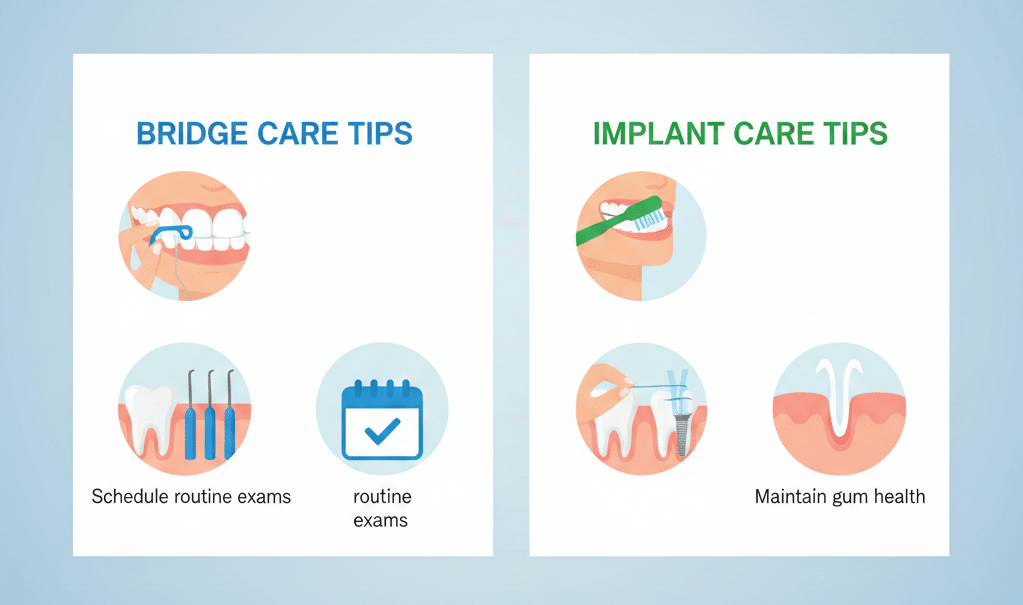
- Bridge care tips
- Thread floss under the bridge
- Use interdental brushes
- Schedule routine exams
- Implant care tips
- Brush normally
- Floss like a natural tooth
- Maintain gum health
Since dental implants are similar to natural teeth, many patients find their daily routine easier after the healing process is finished. Adhering to proper care guidelines helps ensure a smooth healing process after dental implants.
Esthetic Predictability
Oral esthetics are important, particularly in replacing front teeth. The key difference is often how the denture blends with the gumline.
- Bridges may sometimes produce shadows at the gum line.
- Implants protrude from the gum line like natural teeth, providing more esthetic predictability.
Advances in materials make both procedures appear natural, but the body’s reaction usually is what makes the final aesthetic difference.
Long-Term Outcomes and Stability
When assessing long-term survival rates, the practitioner considers durability, tissue health, and maintenance requirements. The following are factors that contribute to success:
- Oral hygiene practices
- Bite forces
- Gum health
- Smoking status
- Medical conditions
In most clinical studies, implants have been shown to be highly stable in the long term because they are incorporated into the bone. Bridges will eventually need to be replaced or adjusted, which is why retreatment discussions are part of the treatment plan.
Factors That Influence Treatment Choice
Knowing the factors that influence your treatment choice is important to make informed decisions. From oral health and medical history to lifestyle and personal preferences, these factors influence our recommendations to ensure your treatment is tailored to your needs.
- Bone density and jaw health
- Gum health
- Location of the missing tooth
- Bite alignment
- Overall oral health
Every month is different. What works well for one patient may not work as well for another.
Making the Right Choice for Tooth Replacement
The decision between these two options has little to do with what is currently in vogue and much to do with what is biologically and structurally sound. Both options will restore your smile, but they work in different ways.
At Vitalize Dental, Dr. Neal Patel offers personalized advice tailored to your oral health needs, goals, and diagnostic results. If you are considering your options and would like to better understand what might be best for your situation, the next step is to schedule a consultation.
Questions People Ask About Dental Implants
Which lasts longer, a dental bridge or an implant?
Dental implants often last longer because they integrate with the jawbone and function like natural tooth roots. Bridges usually last many years but may require replacement over time since they rely on neighboring teeth rather than bone support for stability.
Do implants feel more natural than bridges?
Yes. Implants typically feel more natural because they anchor directly into the jawbone and function like real tooth roots. This design provides stronger bite stability, natural chewing ability, and a sensation closer to your original tooth than bridges do.
Does getting a bridge affect nearby teeth?
A bridge requires reshaping adjacent teeth to hold supporting crowns, which permanently alters those teeth. This preparation may affect their long-term strength, whereas implants stand independently, leaving surrounding natural teeth completely untouched and structurally preserved.
Can both bridges and implants restore chewing ability?
Both options effectively restore chewing and appearance. However, implants often provide greater stability during biting because they fuse with bone. Bridges still improve function significantly but rely on neighboring teeth for support instead of anchoring directly in the jaw.
Which option is easier to clean daily?
Implants are generally easier to maintain because they can be brushed and flossed like natural teeth. Bridges require additional cleaning steps, such as threading floss under the restoration and using special brushes to keep the area beneath the restoration clean.
Do implants help prevent bone loss?
Yes. Implants stimulate the jawbone the way natural tooth roots do, helping maintain bone density after tooth loss. Bridges sit above the gums and do not provide this stimulation, so they cannot prevent bone shrinkage in the same way.