254 Everest Ln #3, St Johns, FL 32259

In the natural world, no great tree can stand against the wind without a deep and steady root system. The soil must be rich, firm, and abundant enough to hold the life it supports. Your smile follows this same ancient law of balance.
When we lose a tooth, the “soil”—the jawbone—begins to recede, much like a riverbank that slowly washes away when the protective trees are removed. At Vitalize Dental St. Johns, FL, Dr. Neal Patel approaches restorative care not just as a clinical procedure, but as a journey to restore the harmony of your oral health.
If you have been told you need bone grafting for dental implants, you are simply being invited to strengthen your foundation before we plant the seeds of a new, lasting smile.
Why the Foundation Matters: The Wisdom of Bone Health
The jawbone is a living, breathing landscape. It stays strong through the constant stimulation of chewing. When a tooth is lost, that stimulation ceases, and the bone begins to thin. This process, known as resorption, can happen more quickly than many realize.
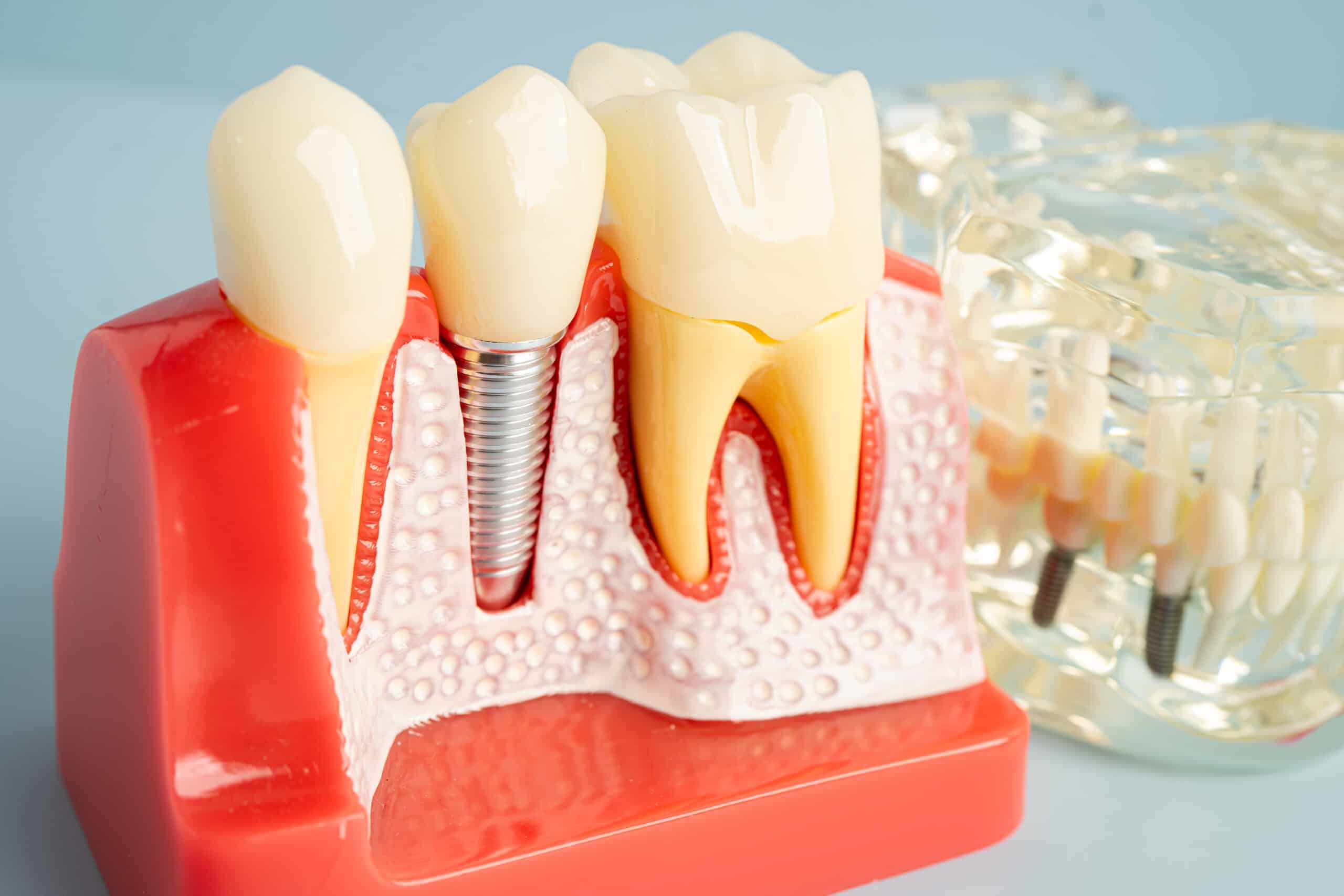
To successfully place a dental implant, there must be enough height and width in the bone to anchor the titanium post. If the bone is too thin or soft, the implant cannot achieve osseointegration—the sacred bond where the living bone fuses with the implant to create a permanent replacement.
Bone grafting for dental implants is the bridge that spans the gap between bone loss and a restored smile. By adding volume and density, Dr. Patel ensures your implant has the support it needs to last a lifetime.
Understanding the Materials: Sources of Renewal
Just as there are many ways to enrich the earth, there are various materials we use to encourage your body to grow new bone. Dr. Patel carefully selects the material that best aligns with your health needs and the specific landscape of your mouth.
| Graft Type | Source | Purpose & Benefit |
| Autograft | Your own body | Often considered the “gold standard” as it uses your own living cells. |
| Allograft | Human donor bone | Highly effective, sterile, and eliminates the need for a second surgical site. |
| Xenograft | Animal-derived (usually bovine) | Acts as a sturdy scaffold for your natural bone to grow into. |
| Alloplast | Synthetic materials | Created in a lab (often using calcium phosphate) to stimulate natural growth. |
During your consultation in our St. Johns clinic, we use advanced CBCT imaging and 3D planning to see the hidden structures of your jaw. This allows Dr. Patel to determine whether particulate vs. block grafts are necessary to restore your foundation.
Specialized Techniques: Restoring the Landscape
Not every journey to a new smile is the same. Depending on where the bone has receded, Dr. Patel may utilize specific techniques to bring balance back to your jaw.
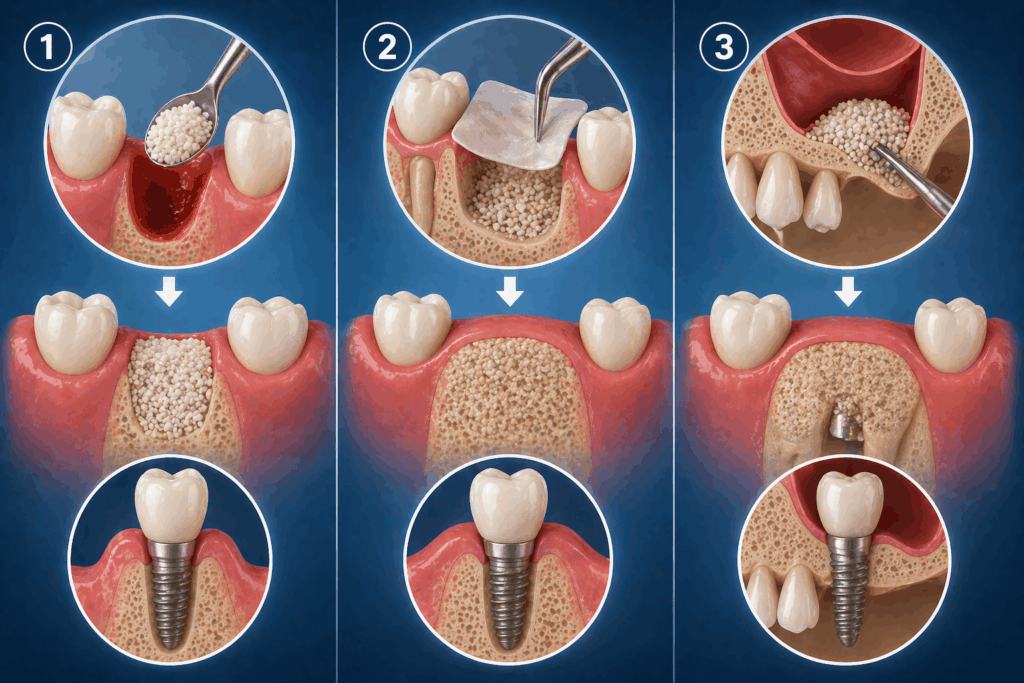
1. Socket Preservation After Extraction
When a tooth is first removed, the empty space (the socket) is vulnerable. By placing a small amount of bone graft material immediately after extraction, we “preserve” the site, preventing the bone from collapsing and making the future implant process much smoother.
2. Ridge Augmentation (Guided Bone Regeneration)
If a tooth has been missing for many seasons, the ridge of the jaw may have become too narrow. Ridge augmentation involves adding graft material to increase the width or height of the bone. We often use a barrier membrane—a protective shield—to keep the faster-growing gum tissue away from the slower-growing bone, allowing the bone to heal in peace.
3. The Sinus Lift (Lateral Window Technique)
The upper jaw, near the back of the mouth, sits close to the maxillary sinuses. If there isn’t enough room to place an implant without entering the sinus cavity, Dr. Patel performs a sinus lift bone graft. This gently lifts the sinus floor, creating space for new bone to grow and safely house an implant.
The Path to Healing: Bone Graft Recovery Time
Patience is a vital part of the healing tradition. While the surgical procedure itself is a single step, the body needs time to transform the graft into living, sturdy bone.
- The Initial Days: You may experience mild swelling or tenderness. This is your body focusing its energy on the site of change.
- The Integration Phase: Bone graft recovery time varies, but it typically takes between 3 to 6 months for the graft to fully integrate with your natural jawbone.
- The Final Step: Once the site is strong, we proceed with the implant placement. You can learn more about the next steps in our guide to dental implants recovery.
Local Care for the St. Johns Community
At Vitalize Dental, we serve our neighbors in St. Johns, Fruit Cove, and the surrounding communities with a commitment to long-term well-being. We understand that the decision to undergo a procedure like bone grafting involves both clinical and financial considerations.
As a PPO-friendly practice, we strive to make this essential foundation-building work accessible. We believe that everyone deserves a smile that feels like home. If you are curious about how these procedures fit into your budget, we invite you to read our detailed breakdown of dental implant cost.
Why Choose Dr. Neal Patel at Vitalize Dental?
Dr. Patel combines years of clinical wisdom with a gentle, patient-centered approach. He views every patient as a member of our community “tribe,” deserving of honesty, transparency, and the highest level of technical skill.
- Guided Wisdom: We use 3D CBCT technology to map your surgery with precision before we even begin.
- Calm Environment: Our clinic is designed to be a sanctuary, where the stress of dental work is replaced by a sense of peace and trust.
- Comprehensive Care: From the initial bone graft to the final crown, your entire journey is managed under one roof with a consistent philosophy of care.
Frequently Asked Questions
Does bone grafting for dental implants hurt?
Most patients are surprised at how manageable the process is. We ensure the area is completely numb during the procedure. Afterward, most people find that any discomfort is similar to a simple extraction and can be managed with mild care and rest.
How do I know if I need a bone graft?
If a tooth has been missing for more than a few months, or if you have advanced gum disease, there is a high likelihood you may need a graft. Dr. Patel will use 3D imaging to measure your bone density and give you a clear, honest answer.
What happens if I choose not to get a bone graft?
Without enough bone, a dental implant is likely to fail, much like a post placed in shifting sand. If you choose not to graft, you may have to consider alternative options like a bridge or dentures, though these do not stop the ongoing cycle of bone loss.
Are there risks involved with the materials used?
The materials we use, whether allograft, xenograft, or synthetic, are highly processed and biocompatible. They are used daily in surgeries across the world with a very high success rate. Dr. Patel will discuss which option is safest and most effective for your specific health history.
How long do I have to wait for my implant after the graft?
Generally, we wait 4 to 6 months for the bone to become strong enough to support the implant. In some rare cases, if the bone loss is very minor, we can perform the graft and place the implant at the same time.